The mNCC in the NEMO Ecosystem: Architecture, Functionalities and Perspectives for Advanced Network Management

Introduction

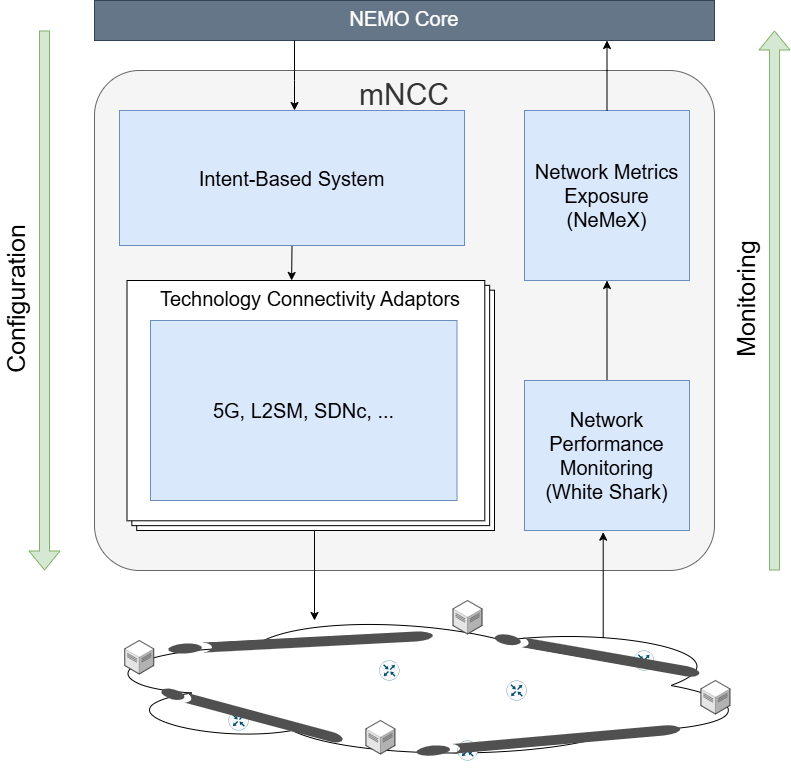
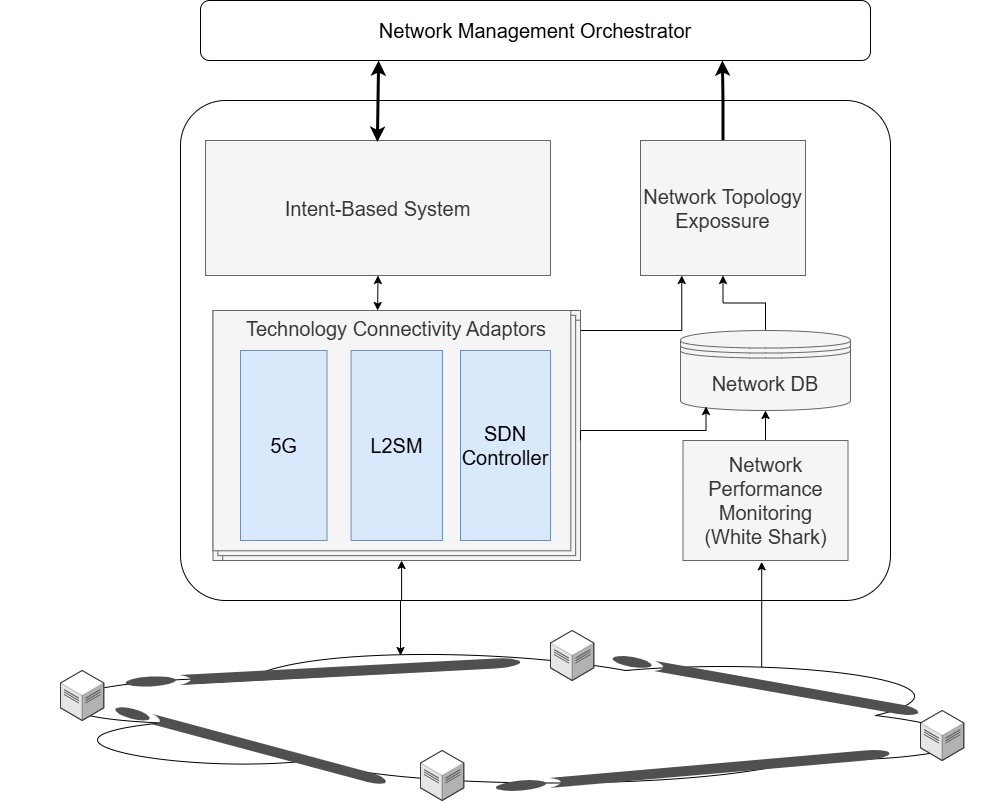
The meta-Network Cluster Controller (mNCC) is a key component within the meta Operating System (meta-OS) of the NEMO project, responsible for managing network connectivity and exposure of performance metrics in multi-cluster and multi-domain environments. Its main function is to act as an interface between the NEMO orchestration layer and the underlying physical infrastructure, providing abstraction of network services and enabling real-time access to network features for the rest of the system components.

Architecture and Components

The mNCC is composed of several modules that integrate advanced management, monitoring and adaptive technology capabilities:

  • Intent-Based System (IBS): Translates high-level intents into specific network configurations, allowing users to define connectivity requirements without worrying about the underlying technology. The IBS classifies, translates and executes intents, supporting the continuous integration of new technology adapters through a modular microkernel architecture.

  • Network Metrics Exposure (NeMeX): Acts as the northbound interface (NBI) to the mNCC, integrating topology and performance metrics from multiple sources and exposing them through RabbitMQ for consumption by the Meta-Orchestrator and other NEMO components. NeMeX enables advanced real-time network health monitoring and analysis.

  • Technology Connectivity Adaptors: These include adapters for technologies such as 5G, TeraFlow SDN Controller and L2SM (Link Layer Secure Microservices), facilitating secure and flexible connection between microservices in different Kubernetes clusters. The L2SM adapter, for example, enables the creation and management of virtual networks between clusters using a gRPC API and custom Kubernetes resources.

  • Network Performance Monitoring: Implements Python-based probes to measure latency, throughput, packet loss and other key metrics, integrating this data into the system to support autonomous decision making.

Workflow and Key Functionalities

The mNCC operates on a continuous cycle of network management and exposure:

  1. Intent Management: The Meta-Orchestrator sends connectivity intents to the mNCC via RabbitMQ. The IBS classifies these intents and translates them into configurations specific to the available technology adapters (e.g. creation of an L2 VPN with TeraFlow SDN or an inter-cluster virtual network with L2SM).
  2. Monitoring and Metrics Exposure: NeMeX collects network metrics from the nodes and links of each cluster, integrating information from Kubernetes and network probes. These metrics are periodically exposed to RabbitMQ, allowing other NEMO components (such as Meta-Orchestrator or CF-DRL) to make decisions based on the current state of the network.
  3. Multi-Technology Integration: The mNCC supports the integration of multiple network technologies (5G, SDN, Kubernetes overlay, etc.), enabling unified resource management in heterogeneous and distributed environments.
  4. Automation and Scalability: mNCC deployment and management are supported by CI/CD frameworks and automation tools, facilitating scalability and efficient operation in production environments.

Use Case: Inter-Cluster Network Management

A typical use case is the creation of a virtual network between two Kubernetes clusters managed by NEMO:

  1. Receiving Intent: Meta-Orchestrator sends an inter-cluster network creation intent.
  2. Classification and Translation: The IBS classifies the intent and translates it into a specific configuration for the L2SM adapter.
  3. Execution: The L2SM adapter uses a gRPC API to create custom network resources on each cluster, establishing a secure, centrally managed connection.
  4. Monitoring: NeMeX collects network metrics from both clusters and exposes them to RabbitMQ, enabling observability and dynamic tuning of connectivity.

Benefits and Future Perspectives

  • Abstraction and Simplification: The mNCC abstracts away the complexity of network management, allowing users to define high-level connectivity requirements without worrying about the underlying technology.

  • Interoperability and Flexibility: The mNCC’s modular architecture facilitates the integration of new network technologies and the management of multi-domain environments.

  • Advanced Monitoring: Real-time exposure of network metrics enables dynamic optimisation and early detection of problems.

  • Automation and Security: The mNCC supports automated deployments and advanced security mechanisms, such as the establishment of encrypted connections or secure workload migration.

As a continuation, the CyberNEMO project is defining Zero-Thrust Network Access (ZTNA), a network management component that evolves from mNCC by providing secure segmentation of content in microservices and the management and monitoring of network access. This component includes other advantages such as log attestation or the use of metrics calculated with AI… But that is another story.

Conclusion

The mNCC is a fundamental component in the NEMO meta-OS, providing advanced, flexible and automated network management in multi-cluster and multi-technology environments. Its modular architecture, based on intents and technology adapters, positions it as a robust and scalable solution for network orchestration in the edge-cloud continuum era.
Read More

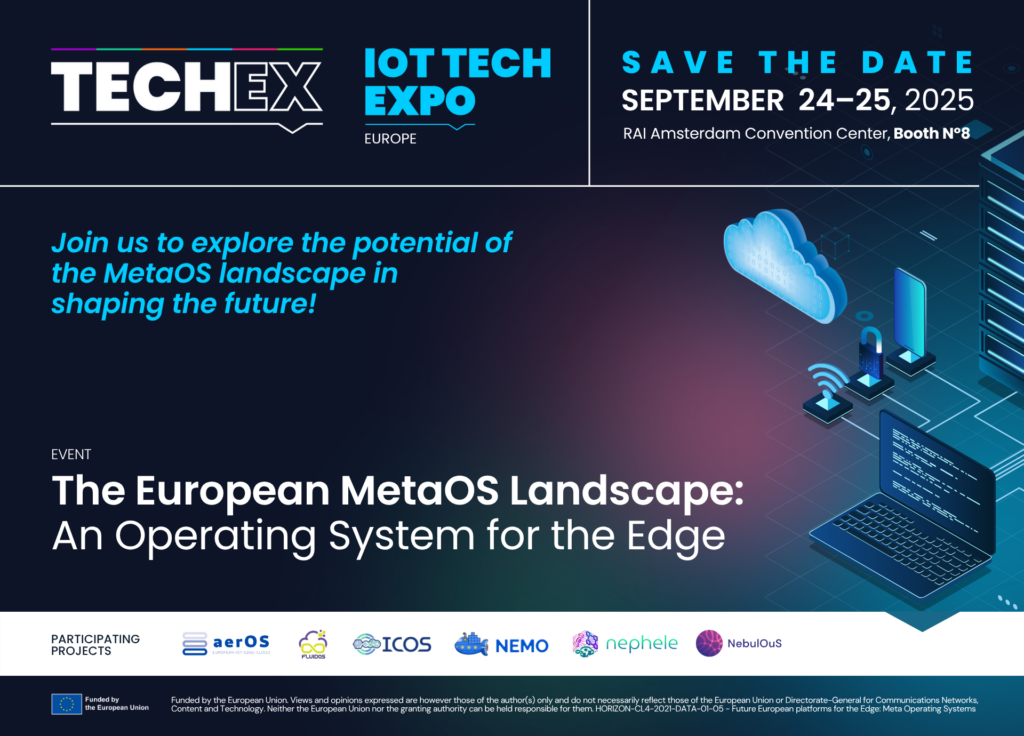
NEMO will be present at IoT Tech Expo 2025

NEMO project will be participating in the IoT Tech Expo 2025 in Amsterdam, The Netherlands, next 24-25 of September. It will attend the event together with other European funded projects such as aerOS, FluidOS, ICOS, Nephele and NebulOuS.

IoT Tech Expo, is a leading event for IoT, Digital Twins & Enterprise Transformation, IoT Security, IoT Connectivity & Connected Devices, Smart Infrastructures & Automation, Data & Analytics and Edge Platforms. This flagship conference serves as a strategic venue for Europe’s leading research and innovation projects to present cutting-edge advancements, strengthen collaboration, and engage with key industrial players.

Attendants to this key event can visit booth number 8 where they will find and learn about the demos of the use cases that each meta-OS projects will showcase.

Read More

7th Plenary Meeting of NEMO in Athens, Day 2

The second day of meetings during the plenary in Athens was dynamic. The day started with WP6 which is dedicated to dissemination and communication activities.

The discussion was focused on the impact made by the publications around the project’s activities and events where NEMO has been showcased. Also the consortium discussed about the next steps to be taken in order to finalise the project in good health.

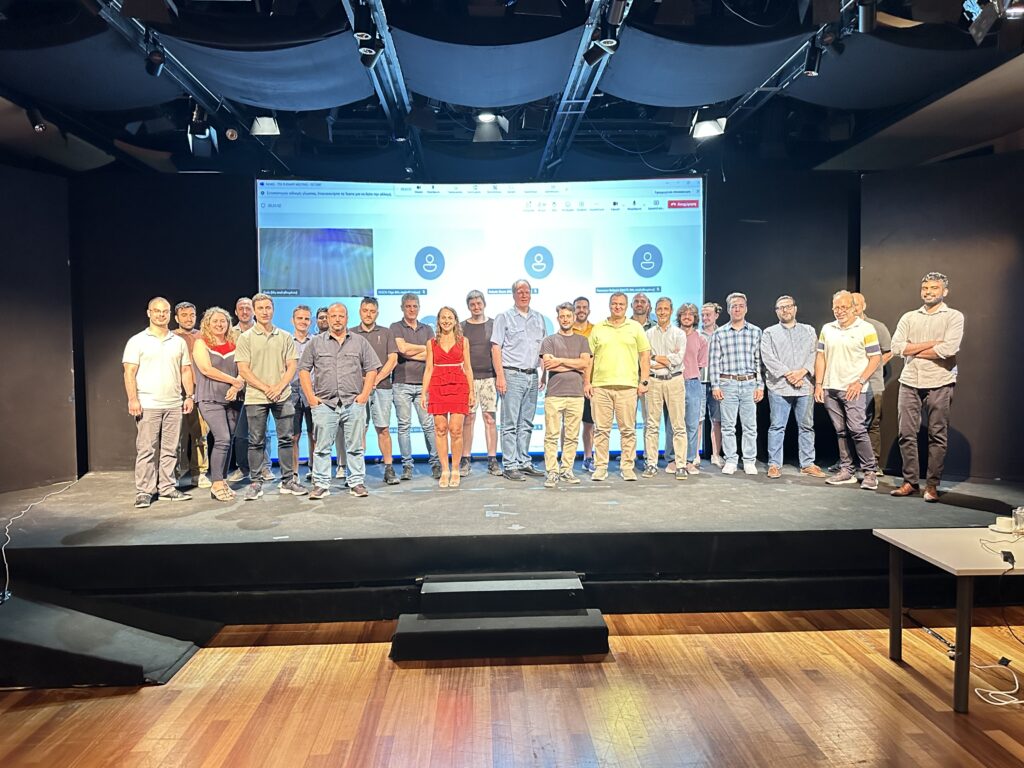
As a good tradition the consortium took a nice group photo.

Read More

NEMO Project consortium gathers in Athens for its 7th Plenary Meeting – Day 1

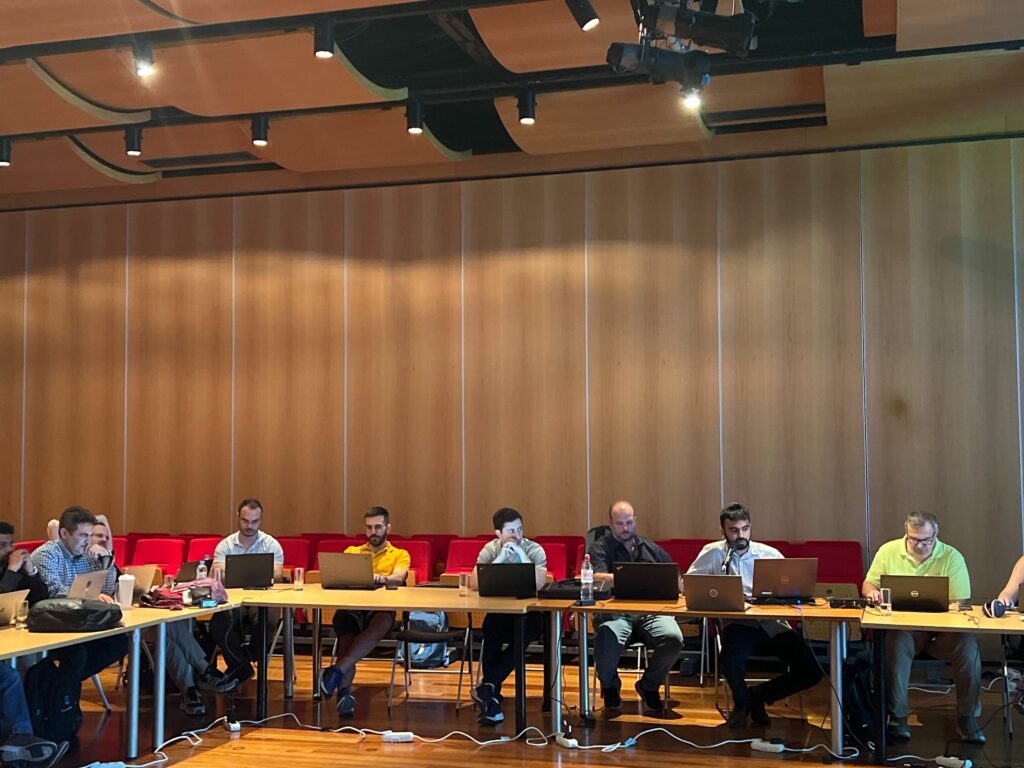
The NEMO Project consortium gathered today for the first day of the 7th Plenary Meeting in Athens, marking a crucial milestone as we enter the final stretch of this ambitious journey. With just three months remaining, the focus has sharpened on consolidating achievements and aligning all partners toward the final objectives.

The gathering that took place on the 26 and 27th of June was an overlook to the last three years of NEMO project in which significant strides have been made in the development and integration of its Meta-Operating System (Meta-OS) a foundational layer enabling seamless orchestration across the IoT-edge-cloud continuum.

In this first day of meetings Work Packages 1-5 & WP7 were discussed amongst the attendants but most of all the development of the pilots. Significant efforts were made by the partners to achieve the use case proposals.

Read More

Smart Media XR Pilot is complete

Video link: https://youtu.be/UkOsPaxf5mw


Text: The Smart Media XR Pilot used the Next Generation Meta Operating System  (Nemo Meta OS) framework to enhance the boundaries of user involvement in XR systems and applications for the public in the context of Historical and Educational applications.

During the pilots two XR experiences were enhanced using cloud computing resources and AI/ML processing. The whole IoT-Edged-Far Edge-Cloud pipeline available from NEMO was used in order to integrate it into two VR systems and presentations.
The pilots took place on the 24/6/2025 at the Hellenic Cosmos Cultural Center.

The firt VR application that was enhanced was the Head Mounted Display VR experience of a visit at the Ancient Workshop of the Sculpturer Phidias. For this the biodata of the user was captured using an Smart Watch IoT device in order to have the application and the museum staff respond to any discomfort and nausea of the user. As it is widely known the usage of head Mounted Display can cause nausea and discomfort , which are very difficult to spot by external observation. Therefore the cloud computations, ML models and resource components of NEMO were used to analyze in realtime the biodata of the user and understand his status.

The second VR application that was enhanced, was a large scale VR Theatre Dome show. The Hellenic Cosmos is one of the few Museums worldwide that features realtime Dome shows with real navigation and presentation form a person. During the trial Nemo resources and ML models were used to capture onsite images of the Museumeducator that drive the experience and understand his gestures and need in navigation and external communication. During the pilot the museumeducator could pilot the VR show just using gestures and signal information to the museum reception about the status of the show all while he was presenting live in from of the audience.

The completion of these trials complete the use case analysis of Trial 5.5 as part of the NEMO project. The NEMO project has the priviledge to be the only project to host use cases targeting Culture and Media among all the EU funded projects.

Read More

mNCC: Key Concepts and Insights

What is mNCC and why is it important for the connectivity of the future?

In an increasingly connected world, where we work, play and communicate via the internet and mobile networks, the way we manage and control those connections becomes critical. This is where the mNCC, or meta-Network Cluster Controller, comes in, a key part of advanced projects such as NEMO, which aims to revolutionise network management in the future.

What does the mNCC do?

Imagine you have several offices, each with its own internet network, and you want them all to work together as if they were one, no matter where they are. The mNCC is like a “conductor” for these networks: it coordinates and controls how they connect to each other, ensuring that everything runs smoothly and efficiently.

Its main job is to unify the management of multiple networks (e.g. those of different companies, cities or even countries), allowing services and applications to run smoothly, no matter what technology or where they are deployed.

Why is this useful?

  • Simplifies management: Previously, each network was managed separately, which was complicated and time-consuming. The mNCC allows many networks to be controlled from one place.

  • Improves communication: It makes it easier for different devices and services (such as video calls, cloud applications or smart sensors) to communicate with each other, even if they are on different networks.

  • Increases security and efficiency: Having centralised control makes it easier to detect and fix problems, as well as protect networks from potential threats.

How does mNCC work in practice?

The mNCC does not work alone: it is part of a larger system called the meta-Operating System (meta-OS), which integrates other tools to monitor, analyse and automate networks. For example, the mNCC can receive a “command” (called an “attempt” or “intent”) to connect two offices and automatically configure everything necessary to make that connection work, even if the networks use different technologies.

In addition, the mNCC monitors network performance (such as speed or stability) and shares that information with other systems so that they can make intelligent decisions, such as moving data to the fastest network or detecting failures before they affect users.

Who is mNCC useful for?

Although mNCC is an advanced technology, its benefits reach all types of users:

  • Enterprises: To connect offices, factories or data centres securely and efficiently.

  • Telecommunications operators: To manage mobile networks, fibre optics or cloud services more intelligently.

  • Smart cities: To coordinate sensors, cameras and public services through a unified network.

Conclusion

The mNCC is a solution that allows multiple networks to be managed and connected as if they were one, simplifying administration, improving communication and making everything work more securely and efficiently. It is a building block for the future of connectivity, where collaboration between different technologies and locations will become increasingly important.

Read More

NEMO project accommplishes the Smart Media City Pilot

The Smart Media City Pilot used the Next Generation Meta Operating System  (Nemo Meta OS) framework to enhance the boundaries of live media capture and user involvement in a live outdoor race event, providing an effective broadcast, analysis and productivity solution and seeked to enhance user engagement  by offering a Personalized Content Delivery solution using a dedicated app.

During the race, spectators and selected runners captured media content using smartphones, tablets, 360 cameras, and, where available along the running circuit. This incoming content underwent automated processing, annotation, and rendering, with AI/ML models running partially on devices and partially at the edge. A curated selection of this content (Production control was remote in Spain Madrid) is then broadcasted in real time, such as through social media, based on the location of leading runners and notable race events, as identified through automated and user-provided annotations.

Spectators if the Pilot Race enhanced their contributions and interacted with other users in response to specific race incidents. The trial emphasized real-time, user-generated content processing and rendering, leveraging Federated Learning (FL) hosted across IoT nodes (smartphones), edge devices, and cloud infrastructure. AI models were trained to recognize Racing Bib Numbers enabling better identification of runners and their precise positioning within each video stream.

You can add the link to the video: https://youtu.be/SKpcN5UUjJs?si=vUQa7wV4z27q2cJ0

Read More

NEMO was present at CAA2025 Conference 2025

The 52nd edition of the CAA International Conference is taking place this week in Athens, Greece.

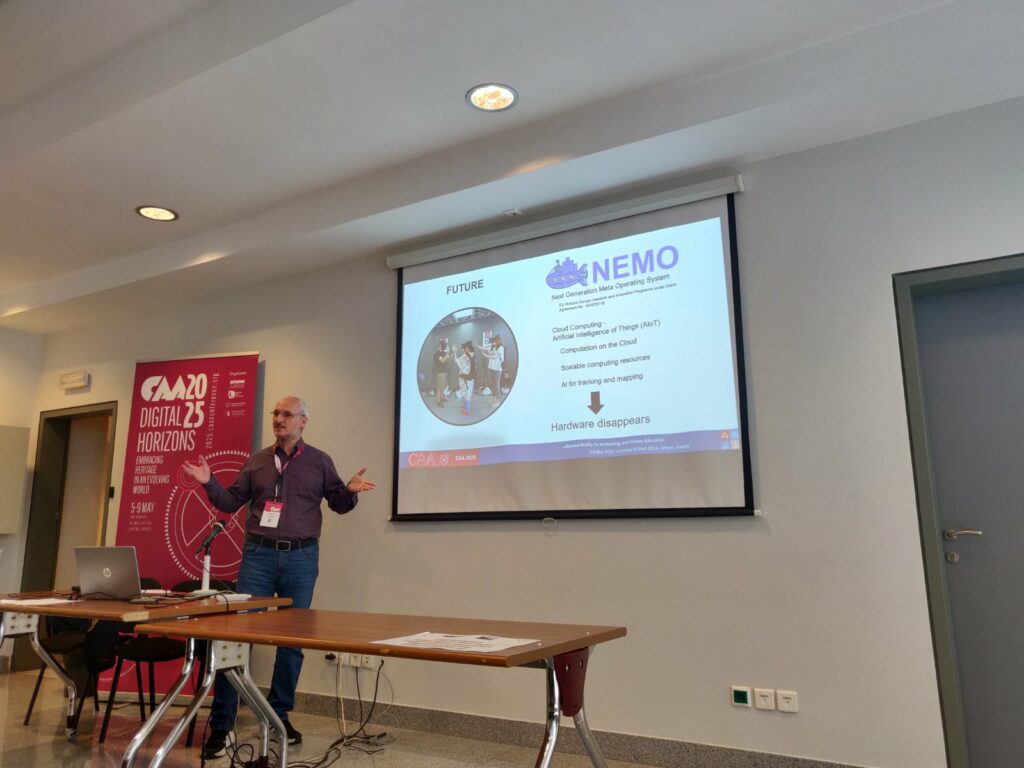
Our coleague from the Foundation of the Hellenic World, Dimitrios Christopoulos presented NEMO project and the Smart Media XR pilot, as part of his presentation about XR in Culture and Education.

Hosted by the University of West Attica, the CAA2025 (https://2025.caaconference.org/) will end on May, 9th.

Read More

EXPERIMENT/MVP implementation sub-phase review

The 10 highly competitive projects (SMEs) of NEMO 2nd Open Call that managed to proceed to the EXPERIMENT phase have competed and evaluated in the context of the EXPERIMENT/MVP implementation sub-phase phase. The review was held on May 5th, 2025. During this sub-phase (MVP implementation), the 10 SMEs implemented their NEMO MVP prototype. This work was documented in the deliverable D2:

“MVP documentation”, which documented the sub-project and the implementation approach, including detailed analysis and screenshots of the application. The participating sub-projects succcessfully completed the MVP implementation sub-phase and proceeded in the next stage.

Read More

DEVELOP/Integration sub-phase review

The Open Call #1 projects in close collaboration with the NEMO consortium managed to integrate their standalone technical solutions into the NEMO framework and perform initial tests with the NEMO Living Lab (LL) environments, where applicable. From the interaction with the LL leaders, the OC#1 projects gained crucial knowledge of the verticals exploited by NEMO and built the foundation for future collaborations.

Read More