ALTO: The protocol designed for uninterrupted Netflix viewing

Today, the most common traffic on the internet is multimedia traffic. This traffic accounts for 70% of the total internet traffic, with the main streaming sites taking the lion’s share of that slice of the pie That is why a few years ago, the IETF asked itself, “How can we optimize the management of multimedia traffic? And the answer to that question was ALTO.

ALTO (Application-Layer Traffic Optimization) is a network protocol that seeks to expose the current state of the transport network to multimedia resource distribution systems (MDS), which are responsible for storing and distributing resources such as a live broadcast of a football match, the new season of your favorite series or the live stream of a streamer from twitch. Knowing how to distribute this information so that it arrives as quickly as possible to all the users of the network and at the same time do it with the least possible number of replicas is a problem of resource allocation that cannot be solved only with the knowledge of how saturated the caches and servers of the MDS are, it is also necessary to know where the requests come from and what capacities we have available to send the resources to all the users who request them.

This is where ALTO comes in, exposing the capabilities of the transport network so that applications can make decisions on how to optimize the management of their network resources so that when you turn on Netflix to watch the new season of your favorite series, it arrives as quickly as possible to your home.

How can ALTO help the NEMO project?

This problem that MDSs face with content distribution also occurs in other contexts, such as distributed networked systems. In these systems we have a very clear optimization challenge: when and where should we create a new instance of the system? To solve this question, at NEMO we have thought of an architecture that evaluates the current and future state of the network through technologies such as Machine Learning or Digital Twins, but to obtain this vision of the transport part we still need something to obtain these metrics and provide that missing piece for our puzzle; and that is where ALTO has fitted in.

Read More

Unveiling the Power of Meta-Orchestration in the NEMO Project

Introduction

In this exploration of meta-orchestration, we’ll cover several key areas. We’ll start by simplifying the concept of containers and how they’re managed, then investigate containerization tools. After that, we’ll dig into the core of orchestration and meta-orchestration, finish with a focus on how this topic is relevant in the NEMO project.

What Are Containers?

Containers represent a transformative approach to software packaging and deployment, emphasizing portability, efficiency, and isolation. These technology constructs encapsulate applications and their dependencies, ensuring consistent execution across diverse environments.

They excel in portability, allowing developers to create applications once and run them anywhere, whether on-premises, in the cloud, or in hybrid setups. They promote efficiency by sharing the host operating system’s kernel, resulting in a lightweight and resource-efficient solution. Security is enhanced through isolation, as each container operates within its own protected environment, reducing potential security vulnerabilities. In essence, containers are versatile vessels that underpin various containerization tools, such as Docker, Podman, LXD, and others, to provide a consistent, efficient, and secure approach to application deployment and management.

What Is Orchestration?

Orchestration in the realm of IT refers to the systematic automation, coordination, and management of various components and tasks within a system to efficiently achieve specific objectives or workflows.

Orchestration tools are like the conductors of complex systems. They ensure that all the different components work together seamlessly, whether it’s deploying and scaling applications, provisioning resources, managing configurations, or handling workflows. Traditional orchestration tools like Kubernetes and OpenShift have been very successful in this domain, providing a structured and repeatable way to manage and automate tasks across systems.

By automating these tasks, orchestration not only improves efficiency but also reduces the risk of errors, enhances consistency, and enables scalability. In essence, it’s the conductor that ensures all the infrastructure play in harmony, resulting in smoother operations and efficient resource utilization.

Meta-Orchestration: Coordinating the Orchestrators

Meta-orchestration represents the art and science of managing and coordinating multiple orchestration systems within an organization’s IT infrastructure, crafting a unified and streamlined operational landscape. It functions as the central control layer, orchestrating interactions among various orchestration tools and technologies.

Meta-orchestration assumes the role of the conductor, bringing harmony to this intricate composition. Leveraging technologies like Kubernetes, Apache Airflow, Genie by Netflix, or Open Cluster Management, it establishes centralized command and control.

Considering the scenario of scaling cloud-native applications, managing configurations, and ensuring consistency across clusters, the meta-orchestration simplifies this task. Scaling policies are defined, and the meta-orchestrator takes care of distributing workloads efficiently across clusters, allocating resources as needed for optimal performance.

Moreover, meta-orchestration acts as a unifying force, ensuring synchronization of updates and configurations across the entire ecosystem. This synchronization minimizes discrepancies and errors, promoting a seamless flow of operations.

In essence, meta-orchestration empowers the orchestrators to work cohesive, with efficient workflows, and ensuring that each tool plays a unique yet coordinated role in the IT operations within the platform.

Meta-Orchestration in the Context of NEMO

In the NEMO project, meta-orchestration takes center stage, orchestrating a complex symphony of IoT nodes, fog clusters, edge, and cloud infrastructures. It enables semi-autonomous AIoT nodes to operate efficiently, reducing latency and performing complex operations locally, optimizing data processing. Trusted edge nodes facilitate federated on-device learning, data sovereignty, and secure execution of tasks, ensuring AI functions even in low-network-coverage environments. The meta-orchestration dynamically configures the NEMO ecosystem, adapting to changing priorities, latency, energy efficiency, and carbon footprint, making it a pivotal component in the NEMO’s vision of a flexible and efficient meta-operating system.

Read More

ATOS

Over one hundred years ago a Norwegian engineer named Fredrik Rosing Bull filed a patent for a “combined sorter-recorder-tabulator of punch cards” machine and so began a journey of innovation and research that Atos upholds to this day.

Along this time, Atos has become a leader in digital transformation with 112,000 employees. European #1 in cybersecurity, cloud and high-performance computing, the Group provides tailored end-to-end solutions for all industries in 71 countries. A pioneer in decarbonization services and products, Atos is committed to a secure and decarbonized digital for its clients.

Atos’ raison d’être deeply connects business lines with the public interest, reflecting its unique responsibility as a technology leader and embodying its ambition to contribute over the short-, medium- and long-term to the civic construction of the digital future around three pillars: trusted digital space, climate change, and scientific & technological excellence.

Thus, Atos main purpose is to design the future of the digital space, supporting the development of knowledge, education, and research in a multicultural approach, while enabling customers and employees, and members of societies at large, to live, work and develop sustainably.

According to its disruptive and sustainable spirit, Atos plays a central and pivotal role as a steadfast partner within the NEMO project, orchestrating key aspects that shape the projects’ trajectory. Beyond the seamless project coordination to commit its visionary goals, Atos is also in charge of the design and development of the NEMO Kernel Space, which serves as the beating heart of the most disruptive, secured, ethical and innovative meta-OS. Among these achievements stands the creation of an AI-based meta-Orchestrator, a sophisticated tool expertly guided by Atos. This orchestrator serves as the linchpin, optimizing computing workflows with finesse across the vast landscape of IoT, edge and cloud environments.

Read More

Our newsletter of September is now live

September is always a good month to make a summary on how things are going. In the case of NEMO project we have been working hard on several things. First of all we have published in a scientific journal called Journal Future Internet regarding the subject: “Federated  Resilience Enhanced with Differential Privacy (FREDY)”.

Also, during this period NEMO Project has launched the first Open Calls in order to embrace new members in the NEMO consortium. In this sense, the submissions portal will remain open until 30th of November 2023!

As time flyes by the project has celebrated its 4th Plenary Meeting in Athens. Also, In October, NEMO will be attending ESAAM 2023.

If you want to stay tunned on the project’s progress don’t miss this newsletter. https://mailchi.mp/70e3ca71db62/nemo-newsletteroct2023-15378321

Read More

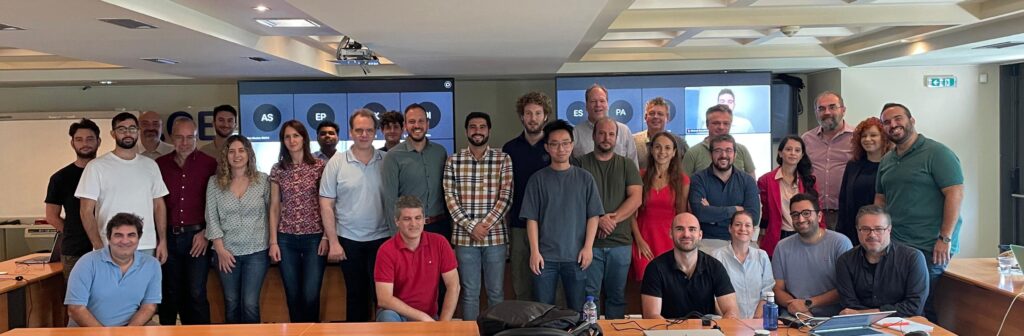
NEMO partners reunite in Athens for their 4th Plenary Meeting

All partners of the NEMO Project have had the opportunity of getting together in Athens to attend the 4th general meeting of the project.

Three days of intense discussions, from the 26th to the 28th of September, with the purpose of helping the project move forward and achieve the goals set.

Also concerning the technical aproach some good insights have been exchanged and the project is going forward as it should.

Many challenges still to be overcome and much work to be done, but with a good spirit and sensations about the outcome.

Read More

NEMO Project OPEN CALLS explained

As a means of enhancing the public awareness, boosting massive adoption and sustainability and ensuring engagement of 3rd parties, NEMO will perform two Open Calls and embrace new members in the NEMO consortium. SMEs eligible for Horizon Europe may submit proposals, except for the consortium’s beneficiaries and parties that may have conflicts of interest.

In this video, Dimitrios Skias, explains the different phases contained in the Open Calls and their purpose.

Link: https://youtu.be/TNXlnovOvM0

Read More

NEMO Project presentation, what is it?

ΝΕΜΟ is a AIoT-edge-cloud european project that aims to introduce an open source, modular and cybersecure meta-operating system, leveraging on existing technologies and introducing novel concepts, methods, tools, testing and engagement campaigns.

NEMO will bring intelligence closer to the data and make AI-as-a-Service an integral part of network self-organisation and micro-services execution orchestration.

Link: https://youtu.be/i_Dk_RUUEgw

Read More
© Peter Winandy

RWTH

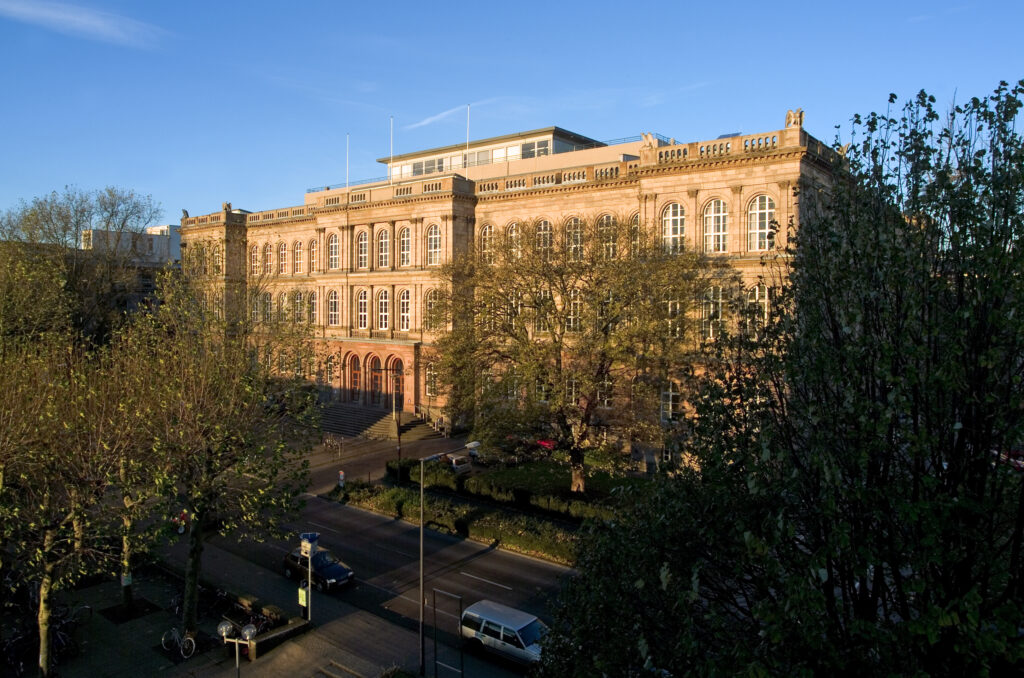
As one of the universities in Germany awarded the status of “Excellence University”, RWTH Aachen University, established in 1870, is a leading technical university in Germany and Europe with over 40,000 students and more than 500 professors. RWTH joins the NEMOproject with the Institute for Automation of Complex Power Systems (ACS), part of the E.ON Energy Research Center.

The E.ON Energy Research Center, a public-private partnership between E.ON SE and RWTH Aachen University funded in 2006, fosters innovative energy research with a strong link with industry in an interdisciplinary approach with five institutes from four different faculties.

Within this research center, the Institute for Automation of Complex Power Systems focuses on research for the automation, modernization, and restructuring of electrical energy distribution systems. This research area deals with solutions for monitoring, maintaining, and developing complex power systems. Both the simulation of dynamic processes in complex network systems and the development of a stable and secure communication infrastructure are areas of expertise for the scientists working at ACS. The Institute is developing the science and technology for the transition to the next-generation energy grid based on network-distributed control systems, agent-based control, distributed observers and measurements, complex system theory, and control under uncertainty. During 2014, the Faculty of Electrical Engineering and Information Technology approved the merger of ACS with the Chair for Operating Systems. This created the first chair in the faculty that operates both in the energy area and the ICT area to better address the modern challenges presented by energy systems.

Role of RWTH in NEMO Project

RWTH plays a major role in creating the Micro-Services Secure Execution Environment (SEE) of NEMO. It allows migrating microservices, unikernels and binaries to Internet of Things (IoT) devices, the edge, or the cloud. It will build on the Hermit [1] project, creating a secure environment using the Rust language, which helps in eliminating memory-unsafety-based security vulnerabilities. RWTH also helps with meta-architecture design and component specification; cybersecurity and digital identity attestation; integration, penetration testing, and lab validation and verification; smart energy and smart mobility validation; cross-living lab validation and third-party support; and dissemination, communication, and training activities. Finally, RWTH, as an institution where knowledge is naturally disclosed, will also be actively involved in the dissemination of the project results through participation in workshops and meetings and the presentation of relevant results in international conferences and journals.

[1]:  https://www.acs.eonerc.rwth-aachen.de/go/id/mjfh/lidx/1

Read More

ENG

Engineering is the Digital Transformation Company, leader in Italy and expanding its global footprint, with around 15,000 associates, with over 70 offices spread across Europe, the United States, and South America.

The Engineering Group, consisting of over 70 companies in 14 countries, has been supporting the continuous evolution of companies and organizations for more than 40 years, thanks to a deep understanding of business processes in all market segments, fully leveraging the opportunities offered by advanced digital technologies and proprietary solutions.

With a strong and relentless focus on Innovation, through our R&I division that comprises over 450 researchers and data scientists (and a global innovation network of universities, startups, and research firms), the Group continues to invest in international R&D projects while exploring groundbreaking technologies and developing new business solutions. The Group continuously invests in human capital, with the internal “Enrico Della Valle” IT & Management Academy, which provides continuous upskilling and reskilling paths for both company employees and stakeholders, with over 32,000 training days per year.

The Engineering Group boasts a diversified portfolio built around proprietary solutions, best-of-breed market solutions, and managed services, and continues to expand its expertise through M&As and partnerships with leading technology players. Our 40+ years presence in all market segments (from Finance to Healthcare, from Utilities to Manufacturing and many more) has allowed us to build deep knowledge of business needs and anticipate them by exploring constantly the evolution of technologies, especially in the field of Cloud, Cybersecurity, Metaverse, Artificial Intelligence and Data.

This unique approach positions Engineering as a key player in the creation of digital ecosystems that bridge the gap between different markets, while developing composable solutions that ultimately foster a continuous Business transformation.

In the NEMO project eng will Support the driver-friendly scenarios for smart city mobility and dispatchable charging of EVs based on RES demand-response along with human-centred smart micro-contracts and micro-payments. Moreover ENG will extend the IoT-NGIN defined Meta-Level DT concept to the micro-services space, introducing the Cybersecure Micro-services’ Digital Twins (CMDT).

Read More

NEMO project to present NEMO – Open Call #1 in EUCloudEdgeIoT.eu organized webinar

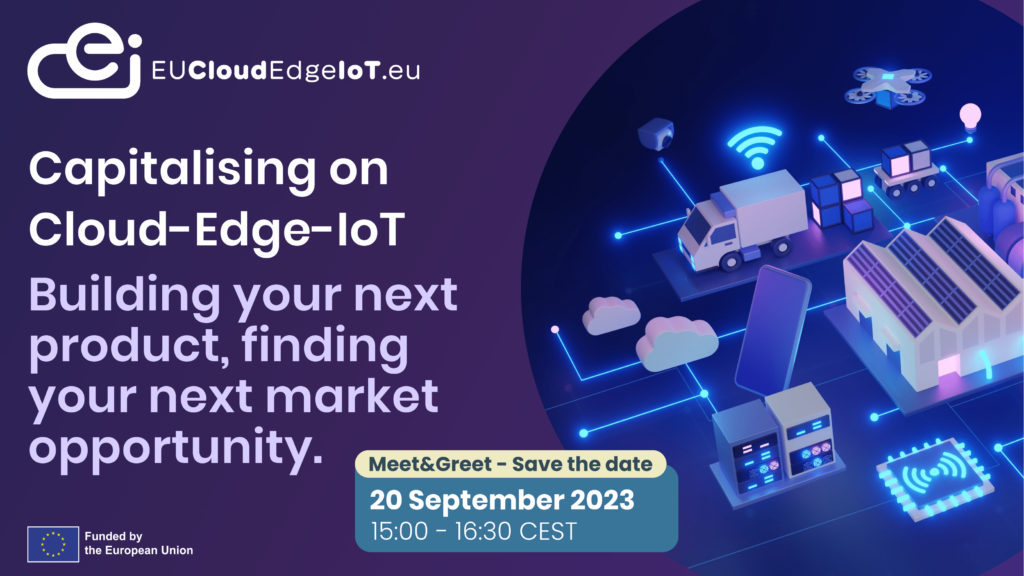
We are delighted to announce that NEMO project will participate in the EUCloudEdgeIoT.eu organized webinar and present the context of NEMO – Open Call #1. The webinar will be held online on the 20th of September 2023 at 15:00 – 16:30 CEST.

Register and find more information for the event via the link below: https://eucloudedgeiot.eu/event/webinar-capitalising-cei-open-calls/

Submissions to the open call are done exclusively through the F6S platform via https://www.f6s.com/nemo-1st-open-call/apply

Further information: Details are available via https://meta-os.eu/index.php/open-calls/

Further information for the NEMO project: via https://meta-os.eu/

Read More