Open Source in NExt generation Meta Operating systems (NEMO)

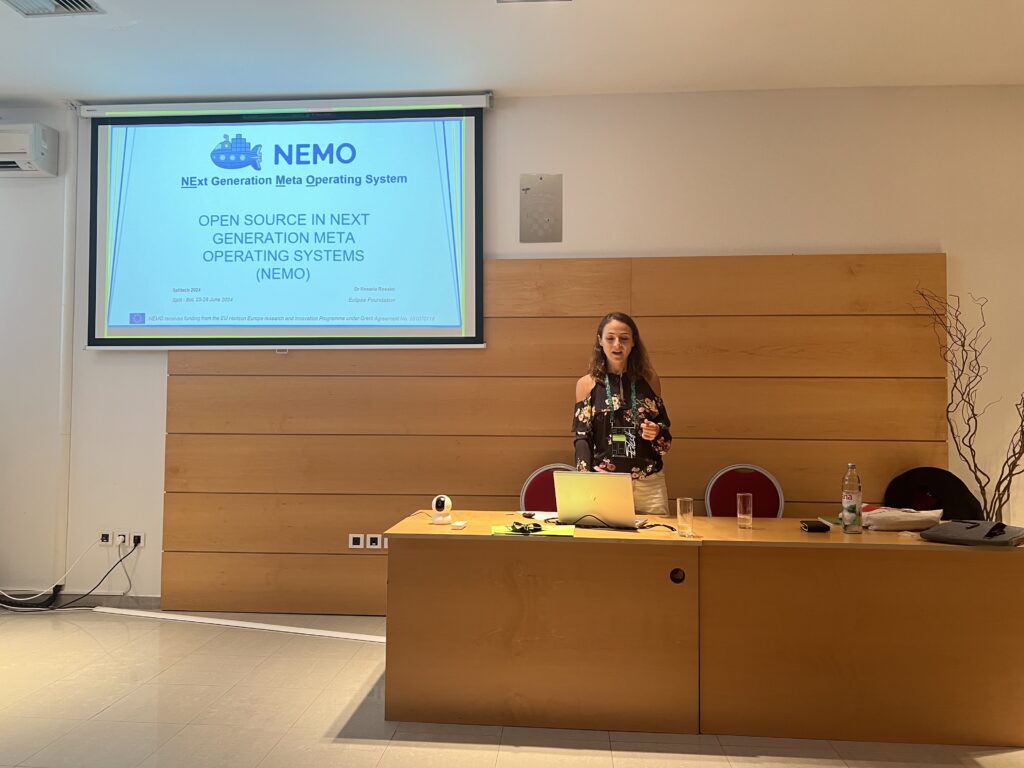
NEMO participated in SpliTech 2024 event that took place in Split – Bol, June 25-28, 2024 during a Special Session on Blockchain applications and Cybersecurity solutions. Rosaria Rossini, from our partner Eclipse Foundation was the one in charge of giving the workshop and she explained thoroughly the project to the attending audience. But also other members of the consortium were able to participate: Terpsichori-Helen Velivassaki (Synelixis Solutions S.A., Greece); Theodore Zahariadis (University of Athens & Synelixis Solutions S.A., Greece); Panagiotis Karkazis (University of West Attika, Greece); Dimitrios Skias (Netcompany, Italy); Enric Pere Pages Montanera (Atos, Italy); Artemis Voulkidis (Synelixis Solutions SA & Power Operations Limited, United Kingdom (Great Britain).

The open source approach aligns with the values of transparency, collaboration, security, and digital sovereignty that are important to many European countries and institutions. It offers practical advantages, cost savings, and opportunities for innovation that contribute to the region’s technological advancement and competi- tiveness. Open source software also fosters collaboration among developers and encourages innovation. On top of these values, NExt generation Meta Operating systems (NEMO) builds the future of the AIoT-edge- cloud continuum by introducing an open source, modu- lar and cyber-secure meta-operating system (metaOS). In this paper, the open source components of the NEMO metaOS are presented for each functional layer in the NEMO architecture, demonstrating the value of open source for the metaOS sustainability.

Read More

NEMO attends The Open Continuum Final Conference 2024

NEMO project had an excellent opportunity to showcase its advancements during the Open Continuum Final Conference celebrated in Brussels this week. Several workshops and panel discussions took place where the team had the chance to engage in insightful discussions with experts from various clusters. NEMO project was explained during the Research Panel number 3 dedicated to MetaOS projects.


The Open Continuum Final Conference focuses on the value of the EUCloudEdgeIoT.eu (EUCEI) community research for the industry, highlighting the latest advancements and results of the Open Continuum CSA and the more than 50 research and innovation actions that it has supported. Attendees had the opportunity to participate in engaging panel discussions, hear about the transition to the Nexus Forum CSA, and learn about the current status of the Unlock CEI CSA use cases. The conference featured also an awards ceremony recognising the most promising projects within our community.

More info: https://eucloudedgeiot.eu/event/euceis-open-continuum-final-conference-registration-now-open/

Read More

Open Calls #2 now open!

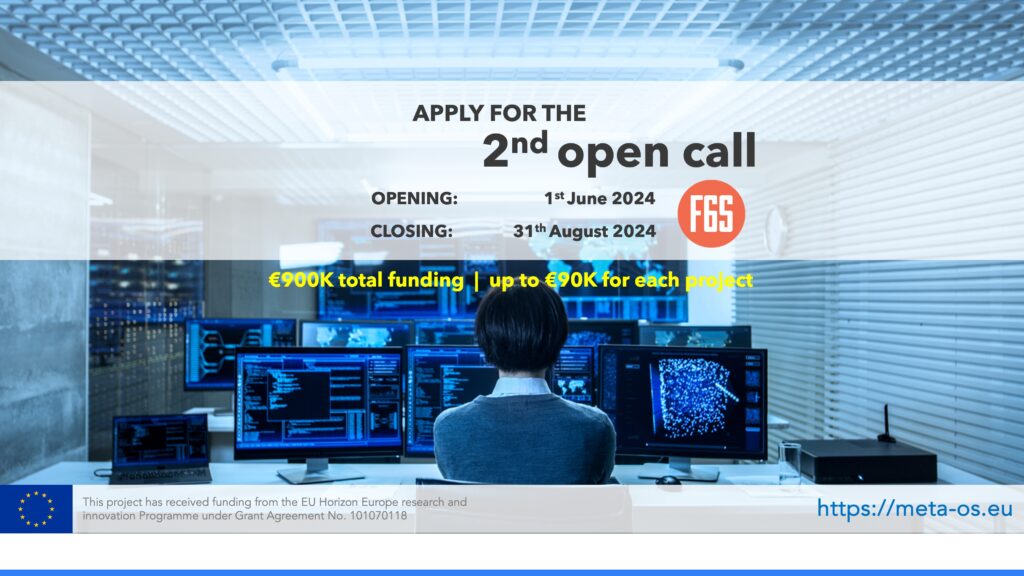
To raise public awareness, promote widespread adoption, ensure sustainability, and engage third parties, NEMO aimed to conduct two open calls to welcome new members into the consortium. The period for Open Calls #2 is now open.

Open Call #2, focuses on validating user acceptance and enhancing the widespread adoption and sustainability of NEMO. This call invites EU-based SMEs to expand NEMO use cases by integrating their new or existing applications and services into the NEMO meta-OS within the verticals of NEMO Living Labs. The proposed applications should leverage NEMO’s capabilities and demonstrate the meta-OS’s potential to meet high-demand requirements, including (but not limited to):

– High device heterogeneity, including low-capability IoT devices
– On-device machine learning
– Low latency and high bandwidth
– Increased energy efficiency and reduced energy footprint of IT operations
– Sustainable IT investments through data, resource, and/or service monetization

More info: https://meta-os.eu/index.php/open-calls/
Apply via: https://www.f6s.com/nemo-2nd-open-call/apply

Read More

A software-defined connectivity service for multi-cluster cloud native applications

Containerization technologies have risen in popularity for deploying microservices applications in cloud-native environments, offering the benefits of traditional virtualization with reduced overhead. However, existing container networking solutions lack support for applications requiring isolated link-layer communications among containers in different clusters. These communications are fundamental to enable the seamless integration of cloud-native solutions in 5G and beyond networks. Accordingly, we present an SDN-enabled networking solution that supports the creation of isolated link-layer virtual networks between containers across different Kubernetes clusters by building virtual circuits that dynamically adapt to changes in the topology. In this article, we introduce our solution, highlighting its advantages over existing alternatives, and provide a comprehensive design overview. Additionally, we validate it through an experiment, offering a deeper understanding of its functionality. Our work fills an existing gap for applications with inter-cluster link-layer networking access requirements in the cloud-native ecosystem.

More info: https://www.sciencedirect.com/science/article/pii/S1389128624003116

Read More

Nemo was present in the EuCNC 6G Summit

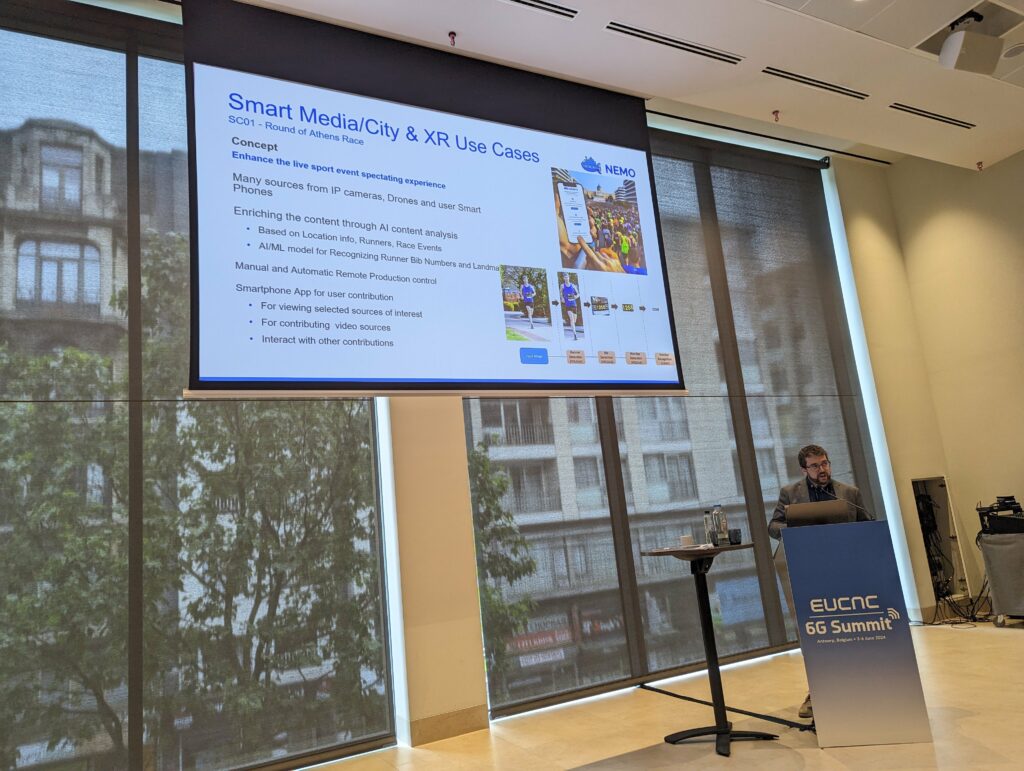
Several partners of NEMO consortium travelled this week to Antwerp to attend the EuCNC 6G Summit. An excellent opportunity to explain NEMO Project, its Use Cases and aproaches. During the event, they celebrated a workshop called “Next-Generation Meta-Operating system for the AIoT-Edge-Cloud-continuum”.

During the session, number 4, ΝΕΜΟ project explained how it establishes itself as the gamechanger of the AIoT-edge-cloud continuum by introducing an open source, modular and cybersecure meta-operating system, leveraging on existing technologies and introducing novel concepts, methods, tools, testing and engagement campaigns. In this session, NEMO will bring its perspective on the need for a metaOS network management for 6G.

The 2024 EuCNC & 6G Summit has brought together cutting-edge research and world-renown industries and businesses, globally attracting in the last years more than 900 delegates from more than 40 countries all over the world, to present and discuss the latest results, and an exhibition with more than 50 exhibitors, for demonstrating the technology developed in the area, namely within research projects from EU R&I programmes.

More info about the workshop: https://www.eucnc.eu/programme/workshops/workshop-11/

Read More

NEMO Project was present in the Regional Growth Conference 2024

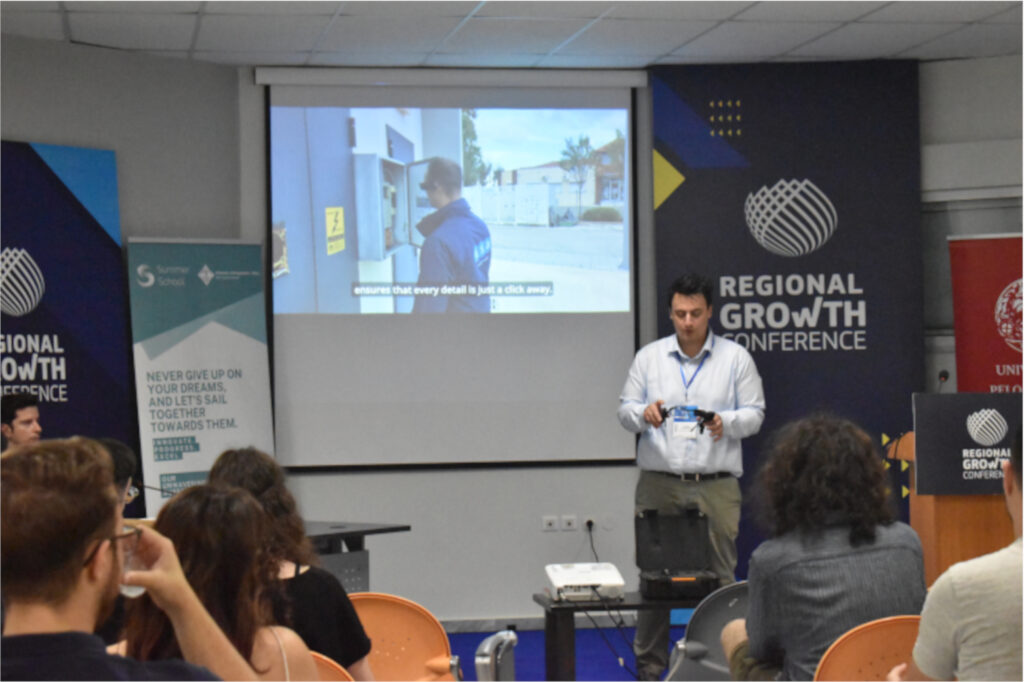
Nemo Project was present in the Regional Growth Conference (RGC 2024) that took place in the greek city of Patras between May, 30th and June, 1st. A workshop called «Augmented Reality for the Industry: a hands-on session» was celebrated and lasted about 2h in total. During this workshop we had the chance to promote the work done in ARGO and NEMO project in general. It was also an on-hands workshop so participants were able to wear AR devices and test the ARGO applications locally.

The Regional Growth Conference (RGC) its an annual event that takes places since 2013. Organised by the oldest newspaper in Greece, the Peloponnisus, it serves as a public platform for dialogue between governmental, regional, academic and business representatives. Its main goal is to address challenges, best practices and policies promoted by European Institutions that need to be implemented in the Regional Development in an effort to bring forward the necessary regional governance model for Greece.

Read More

DESIGN phase review

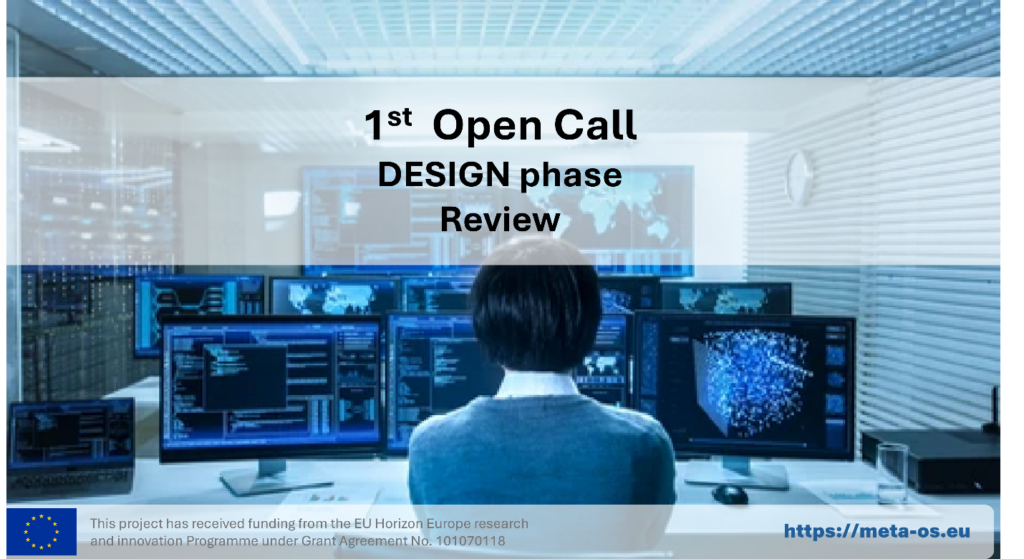
Over the previous two days the OC#1 applicants completed the intensive DESIGN phase, which mandated the fine-tune of their application concept and deliver a comprehensive package. This package included a detailed design deliverable featuring an early prototype for visual and functional clarity as well as a robust tech-business presentation outlining their strategic approach and commercial viability. The next few months the OC#1 projects will transform the ideas/plans demonstrated into actually working blocks.

Read More

Challenger: Blockchain-based Massively Multiplayer Online Game Architecture

Sorbonne University, which is a member of NEMO project consortium has  published a new publication. Boris Chan Yip Hon, Bilel Zaghdoudi, Maria Potop-Butucaru, Sébastien Tixeuil, and Serge Fdida are the authors of this paper.

We propose Challenger a peer-to-peer blockchain-based middleware architecture for narrative games, and discuss its resilience to cheating attacks. Our architecture orchestrates nine services in a fully decentralized manner where nodes are not aware of the entire composition of the system nor its size.  All these components are orchestrated together to obtain (strong) resilience to cheaters.
The main contribution of the paper is to provide, for the first time, an architecture for narrative games agnostic of a particular blockchain that brings together several distinct research areas, namely distributed ledgers, peer-to-peer networks, multi-player-online games and resilience to attacks.

You can read the full version here: https://eprint.iacr.org/2024/726

Read More

R&D EU Programme for Smart Grids: ASM Terni’s Experience

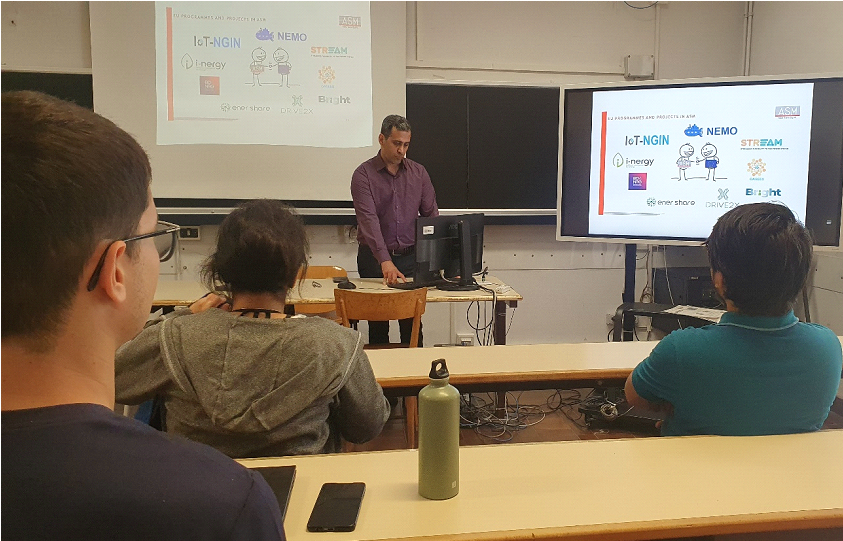
On May 21, 2024, an insightful lecture focusing on existing innovations in electricity distribution was held as part of the Smart Grid course at Sapienza University of Rome. This event, titled “R&D EU Programme for Smart Grids: ASM Terni’s Experience,” provided a platform to discuss the latest advancements and tools developed in various European Projects tested in the ASM Terni Pilot, including the NEMO Project.

Mohammad Ghoreishi, a representative of ASM Terni’s Research and Development Unit, conducted the workshop. He engaged master’s students from the Faculty of Energy Engineering in an in-depth exploration of cutting-edge technologies being tested in European projects, specifically in the field of Smart Grids.

This lecture offered a unique opportunity to highlight how the grid could evolve in the near future. It showcased the motivations, objectives, and results of multiple European projects, including NEMO. Another key goal was to involve students and future researchers with European projects, inspiring the next generation of innovators in the field of smart grid technology.

Through detailed presentations and discussions, the workshop illuminated the transformative potential of these technologies in revolutionizing electricity distribution.

Read More

Call for Papers FedCSIS Conference 2024

The FedCSIS Conference (https://2024.fedcsis.org/) has opened a Call for Papers period to embrace new projects. Starting now and closing on May, 28th. The mission of the FedCSIS Conference Series is to provide a presentation, discussion and a reputable publication forum in computer science and intelligence systems. The forum invites researchers and practitioners from around the world to contribute their research results focused on their scientific and professional interests in a chosen area.

The FedCSIS conference consists of the Main Track and Thematic Tracks. Papers submitted to the Main Track can be assigned, by their authors, to Topical Areas, which are managed by Topical Area Curators. Based on the scope of the contribution, Topical Area Curators select its reviewers from the Main Track Program Committee. Besides the Main Track, the authors may prefer to submit their papers to Thematic Tracks, as listed below.

For all five Topical Areas, situated within a general domain of Computer Science, the continually emerging topic of Intelligence Systems stands as the common denominator. All Thematic Tracks also refer to the Intelligence Systems from different perspectives. They are regarded as a path toward introducing more Intelligence into Computer Science and IT.


Read More