NEMO present in MECC 2024

NEMO perspective has been shared during the fruitful Panel Discussion “Meta Operating Systems for The Edge Continuum: Current Status, Trends, and Challenges”, which took place in the context of 1st International Workshop on MetaOS for the Cloud-Edge-IoT Continuum (MECC 2024) on April 22nd 2024 in Athens, Greece. Dr Terpsi Velivassaki (SYN), NEMO Technical Coordinator, joined the panel together with Vasilis Pitsilis (aerOS) Fulvio Risso (FLUIDOS ), Panagiotis Trakadas (EICOS), Yiannis Verginadis (NebulOuS) and Anastasios Zafeiropoulos (NEPHELE).

The discussion touched on the topics of how meta-OS is conceived across the six EU-funded projects, with a consensus on the IoT, edge and cloud resources abstraction for the delivery of a multitude of diverse containerized distributed applications under defined requirements. The orchestration and discovery of such resources and applications attracted attention of the panelists, who shared their projects’ approach on these matters. Moreover, the southbound boundaries of such ochestration has been duly discussed and projects’ views on the integration of low-end IoT devices have been presented.

Furthermore, the panel agreed that latency-critical and crisis management applications will be the first candidates to benefit from the developed meta-OS, before it becomes a commodity for application delivery.

It has to be noted that all projects’ representatives have been very positive on the content and outcomes of the discussion, which led to seeking collaboration opportunities in frequent future interactions either as in form of exchange of ideas or even common approach on protocols’ specifications.

Read More

Reviewing NEMO living labs work package

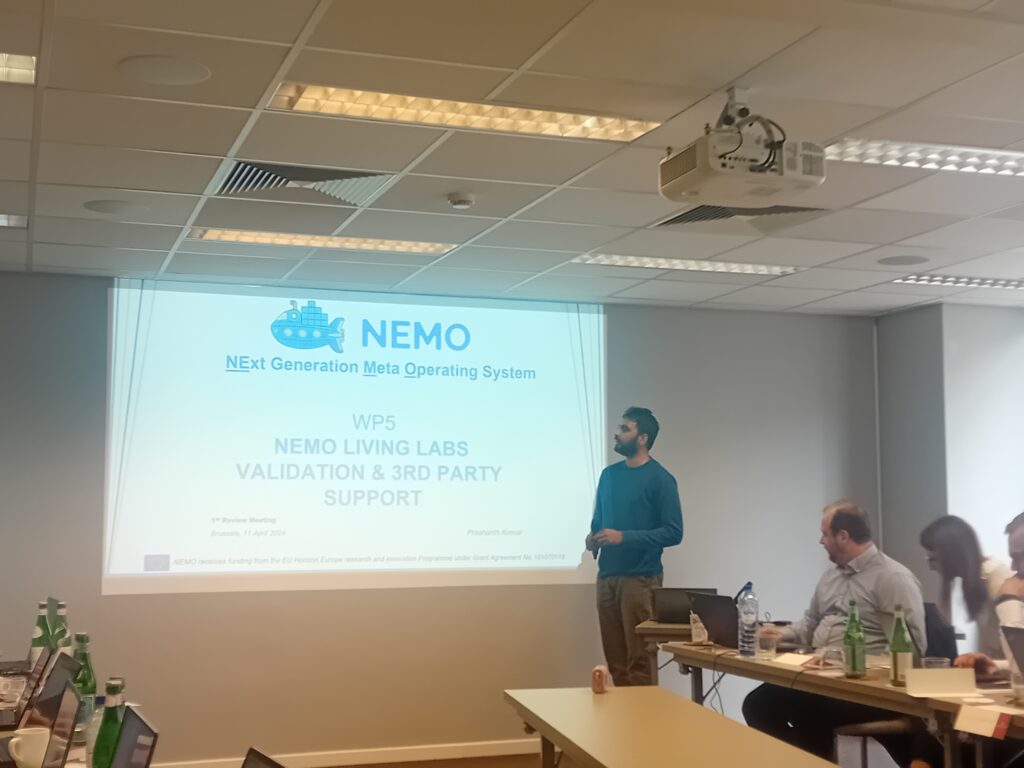
At the mid-review meeting for the NEMO project, progress across all tasks of Work Package 5 was presented. This included updates on the open data management plan, the setup of trial sites, and early results from the pilots. The reviewers well received the presentation, expressing appreciation for the efforts to date and providing positive feedback.

One of the main topics discussed was the NEMO project’s potential to impact diverse sectors such as farming, energy, mobility/city, industry, and media & XR. Particularly noteworthy is the commitment to reducing CO2 emissions, a core objective that resonates strongly with the project’s sustainability goals. The discussions delved into the methods for monitoring CO2 reduction during and after the validation activities, emphasizing the dedication to environmental consciousness. Additional discussions focused on another key objective of Work Package 5: integrating new components introduced through open calls and providing the necessary support to develop further proof-of-concept demonstrators. These initiatives are crucial as they underscore the practical applications and benefits of the project’s open collaboration model.

As we move forward with the NEMO project, we will use the feedback received during the review to refine our efforts and enhance our work.

Read More

Review on the Communications and Dissemination Activities of NEMO

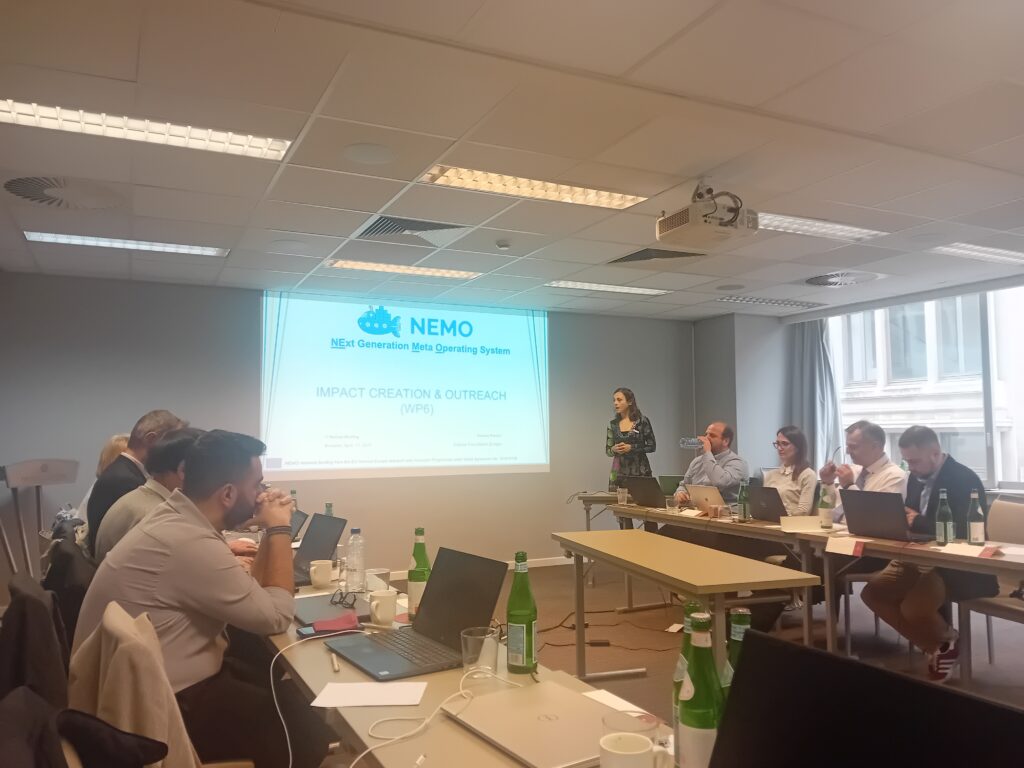
On the WP6 side the presentation was well received and triggered interesting conversation. In fact, WP6 is the work package dedicated to the ‘outreach and impact’ aspects, focusing on increasing the visibility of the NEMO project in order to attract the first users and to encourage the current consortium to continue and maintain the activities in the project. In other words, the objective of WP6 is to sustain the project by initiating a community of consumers and developers of NEMO technologies.In particular, the work package formed an Advisory Board for collecting feedback and advice on system approach. The work package is consolidating project results and preparing the ground for their large-scale exploitation, also by triggering the scientific and technical communities to bring forward the state of the art on project technologies. Furthermore, the work package aim is to set-up communication channels to disseminate Open Calls and project outcomes as well as contribute to relevant Open source communities & foundations, standards organizations, and associations.

Read More

NEMO in the 1st Automation & Robotics expo!

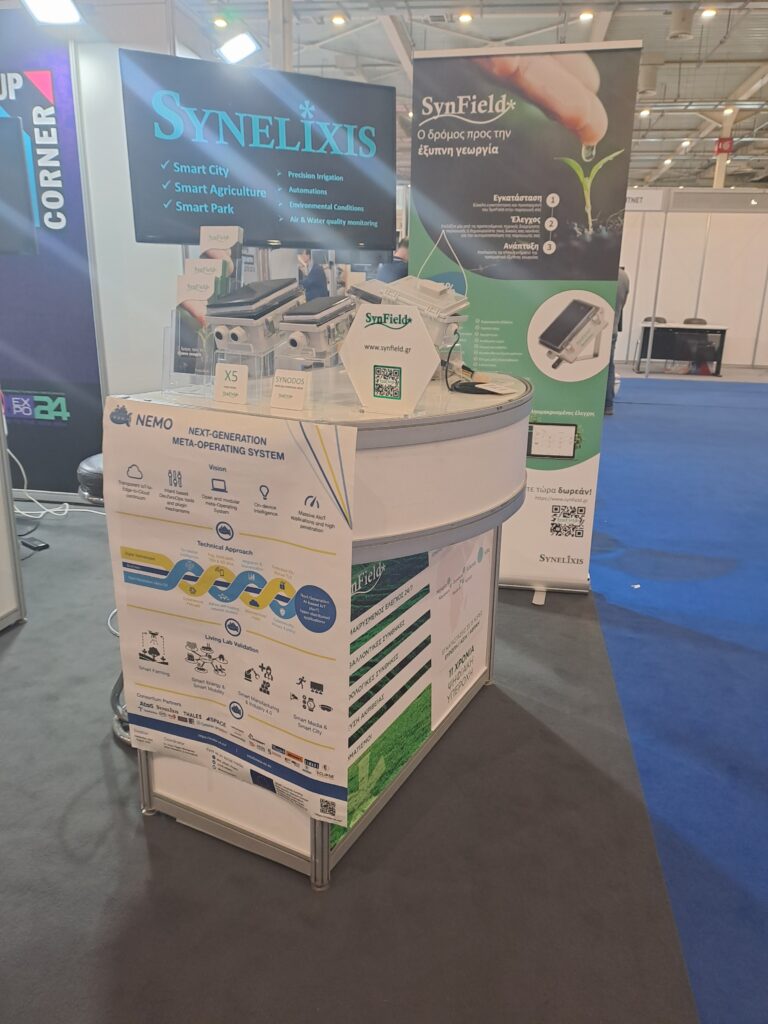
NEMO has been at the 1st Automation & Robotics Exhibition in Athens! The A &R EXPO ’24 took place on 12-14 April 2024 at the Athens Metropolitan Expo. NEMO has been hosted at our partner’s Synelixis’ booth, where visitors had the chance to get insights about NEMO’s innovative contributions and potential to automate Smart Agriculture processes by combining smart monitoring with precision farming via autonomous drones and agri-robots. Visitors expressed high interest in the technologies incorporated in the NEMO project as per agri-environmental monitoring and precision farming solutions, including Synelixis’ SynField smart agriculture solution, autonomous drones and agri-robots integrated into a holistic Smart Agricultural solution leveraging the merits of AI, IoT and edge computing, as proposed and implemented in NEMO. Moreover, visitors have welcomed the NEMO approach on cost savings for the farmer through energy- and carbon aware utilization of resources, as a viable way for adoption of Smart Farming technological innovations.

Read More

Our April’s newsletter is out!

NEMO project has published its 3rd newsletter in April. In this occasion we are happy to announce that we will be facing our first review of the project shortly. This is an exciting moment for all EU projects as it is when the EU Comission reviewers take a look to the nice work done so far and set the premises for the next half of the project.

Another great achievement during the last few months was that NEMO project was presented by Synelixis at the 30th Anniversary International Exhibition of Agricultural Machinery and Equipment, AGROTICA 2024.

In this newsletter you can also read about a recent and noteworthy trend that has emerged in the realm of telecommunication research: the increasing demand for a mobile network devoid of management functionality.

If you are interested in learning how the project is progressing this piece of content is a really good way to be aware of the state of things. Read it here. (https://mailchi.mp/d2907c4819e5/nemo-newsletter-april-2024).


Read More

Multisite gaming streaming optimization over virtualized 5G environment using Deep Reinforcement Learning techniques

The massive growth of live streaming, especially gaming-focused content, has led to an overall increase in global bandwidth consumption. Certain services see their quality diminished at times of peak consumption, degrading the quality of the content. This trend generates new research related to optimizing image quality according to network and service conditions. In this work we present a gaming streaming use case optimization on a real multisite 5G environment. The paper outlines the virtualized workflow of the use case and provides a detailed description of the applications and resources deployed for the simulation. This simulation tests the optimization of the service based on the addition of Artificial Intelligence (AI) algorithms, assuring the delivery of content with good Quality of Experience (QoE) under different working conditions. The AI introduced is based on Deep Reinforcement Learning (DRL) algorithms that can adapt, in a flexible way, to the different conditions that the multimedia workflow could face. That is, adapt, through corrective actions, the streaming bitrate, in order to optimize the QoE of the content on a real-time multisite scenario. The results of this work demonstrate how we have been able to minimize content losses, as well as the fact of obtaining high audiovisual multimedia quality results with higher bitrates, compared to a service without an optimizer integrated in the system. In a multi-site environment, we have achieved an improvement of 20 percentage points in terms of blockiness efficiency and also 15 percentage points in block loss.

Read More

Breaking Boundaries: The Evolution of 5G Access in Integrated Networks

In recent months, a noteworthy trend has emerged in the realm of telecommunication research: the increasing demand for a mobile network devoid of management functionality. Essentially, stakeholders are seeking a network that serves merely as a component of a larger ecosystem. To many entrenched in the telco domain, this concept may seem perplexing, if not outright absurd. After all, we’ve long embraced the notion that private networks lack charging functionality, rely on direct roaming arrangements between networks, and often adopt a trial-and-error approach to network planning. Now, we’re confronted with the prospect of networks devoid of subscriber management systems, alarm displays, and traffic monitoring tools.

As NEMO progresses into the latter stages of its project lifecycle, concrete inquiries emerge regarding the integration of 5G technology within this multifaceted platform. At the forefront of this endeavor lies the pivotal question: How can we seamlessly incorporate 5G access into the NEMO network controller? Upon initial examination, it becomes apparent that numerous functions are redundantly performed across both the 5G network and the NEMO network controller. In essence, NEMO serves as the overarching framework that delineates the future trajectory of network integration endeavors.

Enter Cumucore’s 5G Core (NC), renowned for its exceptional flexibility and adaptability. Leveraging a spectrum of integration options, ranging from RESTful APIs to more traditional telco Network Exposure Function (NEF) approaches, Cumucore’s solution offers unparalleled versatility. Indeed, the boundaries of flexibility can be pushed to extremes, enabling the relocation of all network management functions external to the core network infrastructure. The realm of possibilities is virtually limitless, presenting a tantalizing prospect for future architectural discussions surrounding 6G networks.

Central to these discussions is the fundamental question of which functions necessitate exposure within private networks for external control. While the landscape may evolve, one certainty remains: private networks will inherently require capabilities distinct from those of their public counterparts. As we navigate the intricacies of network architecture, it becomes increasingly evident that the delineation between public and private networks extends far beyond mere access. Rather, it encompasses a spectrum of functionalities, each tailored to address the unique demands of disparate environments.

At the heart of this paradigm shift lies the recognition that the conventional delineation between access and core functionalities is no longer sacrosanct. Instead, we must embrace a holistic approach to network design, one that transcends traditional boundaries and fosters seamless integration across disparate systems. Cumucore’s 5G NC serves as a beacon of innovation in this evolving landscape, offering a blueprint for the convergence of access and core functionalities within private network environments.

As we chart the course for the future of telecommunications, one thing is abundantly clear: the era of standalone access networks is rapidly fading into obsolescence. In its place emerges a new paradigm, one characterized by symbiotic relationships between diverse network components and a relentless pursuit of interoperability. Through strategic partnerships and technological innovation, we stand poised to usher in a new era of connectivity—one defined not by isolated networks, but by the seamless integration of disparate systems in pursuit of a common goal: unparalleled efficiency and connectivity in an ever-evolving digital landscape.


Read More

NEMO 5th Plenary Meeting was celebrated in Madrid

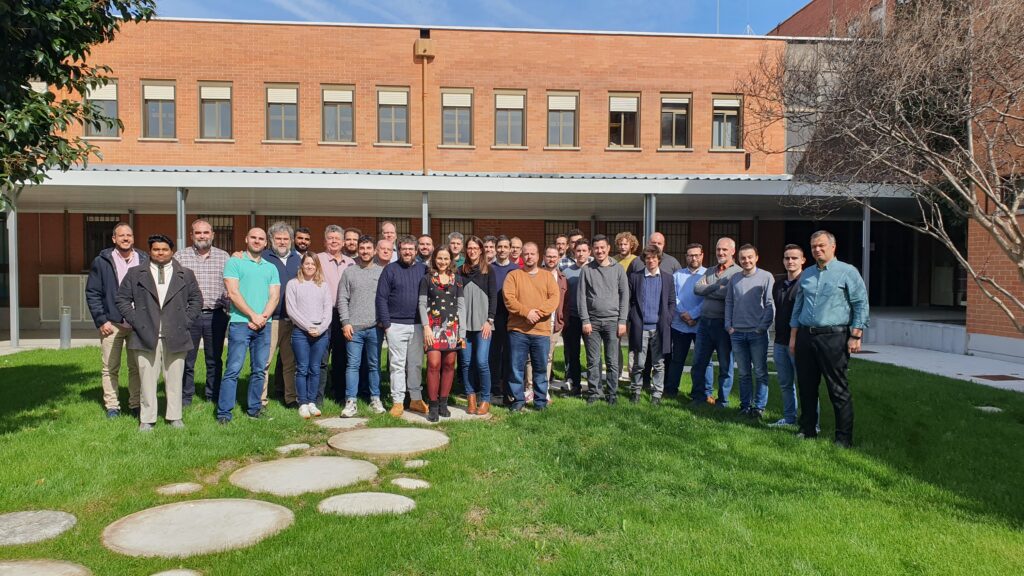
Nemo partners got together in Madrid to celebrate the 5th General Meeting of the project. The calendar keeps running and we have already crossed halfway of the project.

We have had an overview about the state of the different work packages, and some serious milestones have been achieved. We have looked at achievements but also at next steps. Been also watching the demos of some use cases and resolving technical doubts and challenges.

In the other hand, a big event will take place next month, our Intermediate Review with the European Commission. This meeting has been very productive as we have been preparing that important session.

We will continue working hard to shape the future of meta-OS systems.

Read More

Pi, a very special number

Happy Pi Day!

Mark your calendars, math enthusiasts – today, March 14th, is Pi Day! This day celebrates the mathematical constant pi (represented by the Greek letter π). The date itself, written in American format (3/14), reflects the first three digits of pi, making it a fun and easy way to remember this day.

Pi is a fundamental number in mathematics, used to calculate the area and circumference of circles. It’s a never-ending decimal, meaning its digits go on forever without repeating. Pi plays a role in countless fields, from engineering and physics to computer graphics and astronomy. So next time you bite into a slice of pie, remember the fascinating world of mathematics that pi represents!

Read More

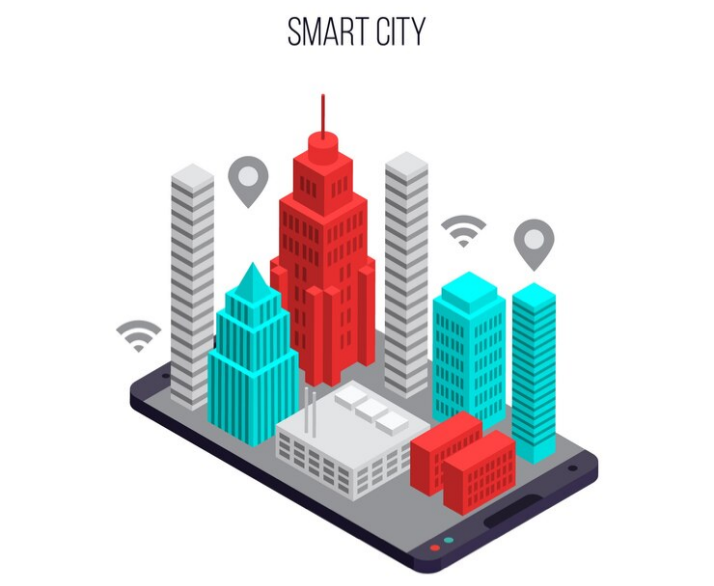
Illustrating the Transformative Power of AI, IoT, Edge, and Cloud Convergence: Smarter Cities Use Cases

Edge computing, a distributed computing paradigm that moves computation and data storage closer to data sources1, has a noticeable importance in an expanding array of industrial applications2, including the focal area of this blog – namely, smarter cities. Edge computing paves the way for improved, rapid, and sustainable functionalities, tackling challenges arising from the fast-paced technological advancements and meeting the heightened demands of our everyday routines. Simultaneously, there is space for further development.

The crucial question is therefore: Which applications within smarter cities could harness the potential of edge computing?

Smart Traffic Management

Several instances of Edge Computing in traffic management involve the utilization of Internet of Things (IoT) sensors and Artificial Intelligence (AI) algorithms. These emerging technologies are employed to deploy sensors on traffic lights, roads, and vehicles, analyzing the collected data. In detail, IoT services can be leveraged for real-time monitoring of traffic flow, congestion, and road conditions, facilitating optimal traffic management. As for the AI algorithms, they can be utilized to analyze the available data and optimize traffic signal timings, reroute traffic dynamically reduce congestion and forecast traffic conditions. This approach ensures driver safety, minimizes travel times and costs associated with heightened traffic, and aims to minimize inconvenience for drivers.

Illustratively, Moscow effectively tackled its traffic challenges with the establishment of the Moscow Traffic Control Centre, by managing over 40,000 traffic lights, 185 information screens, 3,000+ cameras, and 3,900 sensors non-stop, facilitating continuous real-time traffic observation, forecasting, and regulation. The integration of the Internet of Things and computer modeling supports the analysis of actual road situations via the creation of a digital twin of Moscow as a prototype. More than 4.5 million residents benefit from the dynamic transport model by receiving real-time traffic assessments, short-term forecasts, and 24/7 notifications via SMS and push-notifications. The digital twin, driven by diverse sensors and monitoring systems, enhances communication about alterations in public transport and traffic conditions, reaching residents based on their transport behavior and profile.

Smart Infrastructure Maintenance

In the domain of smart infrastructure maintenance, the integration of cutting-edge technologies is reshaping the way we approach the maintenance of vital structures. Embracing the IoT, sensors are strategically placed on bridges, roads, and other critical infrastructure, providing continuous monitoring of structures’ health and safety. In Amsterdam, smart street lighting systems that adjust their brightness based on real-time conditions contribute to energy efficiency and reduced maintenance costs. AI takes center stage in predictive maintenance, analyzing data collected by these sensors to foresee the maintenance requirements. This approach not only minimizes downtime but also extends the overall lifespan of the infrastructure. Complementing these advancements is the use of Edge Computing, where critical data is processed at the edge in real-time. This facilitates swift identification and response to potential issues, ensuring a proactive and efficient maintenance strategy for our essential infrastructure.

Environmental Monitoring & Waste Management

The urgent requirements in environmental monitoring and waste management are addressed through Edge Computing which offers solutions to pressing environmental, social, and governance (ESG) concerns, facilitating the way for a more sustainable future. The integration of cutting-edge technologies is suggested, via the utilization of practices such as IoT sensors in waste bins to monitor fill levels and optimize garbage collection routes. Moreover, sensors for monitoring air and water quality in real-time conditions are also recommended, recording an increasing number of IoT-based air quality monitoring systems for smart cities1. For instance, IoT sensors in Barcelona are utilized to monitor water quality in real-time and detect leaks in the water supply infrastructure, reducing water wastage.

AI algorithms for predicting future waste generation, optimizing collection schedules, and reducing operational costs is another paradigm of good practices. Other examples include the AI analysis that processes environmental data, predicts pollution levels and recommends measures for pollution control. At the same time, cloud integration enables the consolidation of data on cloud platforms for city-wide analytics and long-term planning. Cloud collaboration further enhances this effort by sharing environmental data on cloud platforms, fostering collaboration between cities and organizations for a broader impact on environmental sustainability.

In summary, integrating Edge Computing into our everyday activities enhances operational efficiency, safety, and sustainability. This improvement comes from streamlining the collection, processing, and efficient management of available, reliable, and precise data at various stages of processes. The potential for further development remains, opening doors for additional applications that utilize these tools and contribute to an enhanced quality of life.

Read More